2026.04.26
”The textile machinery industry combines creativity and the business side of the textile industry, which I like.”
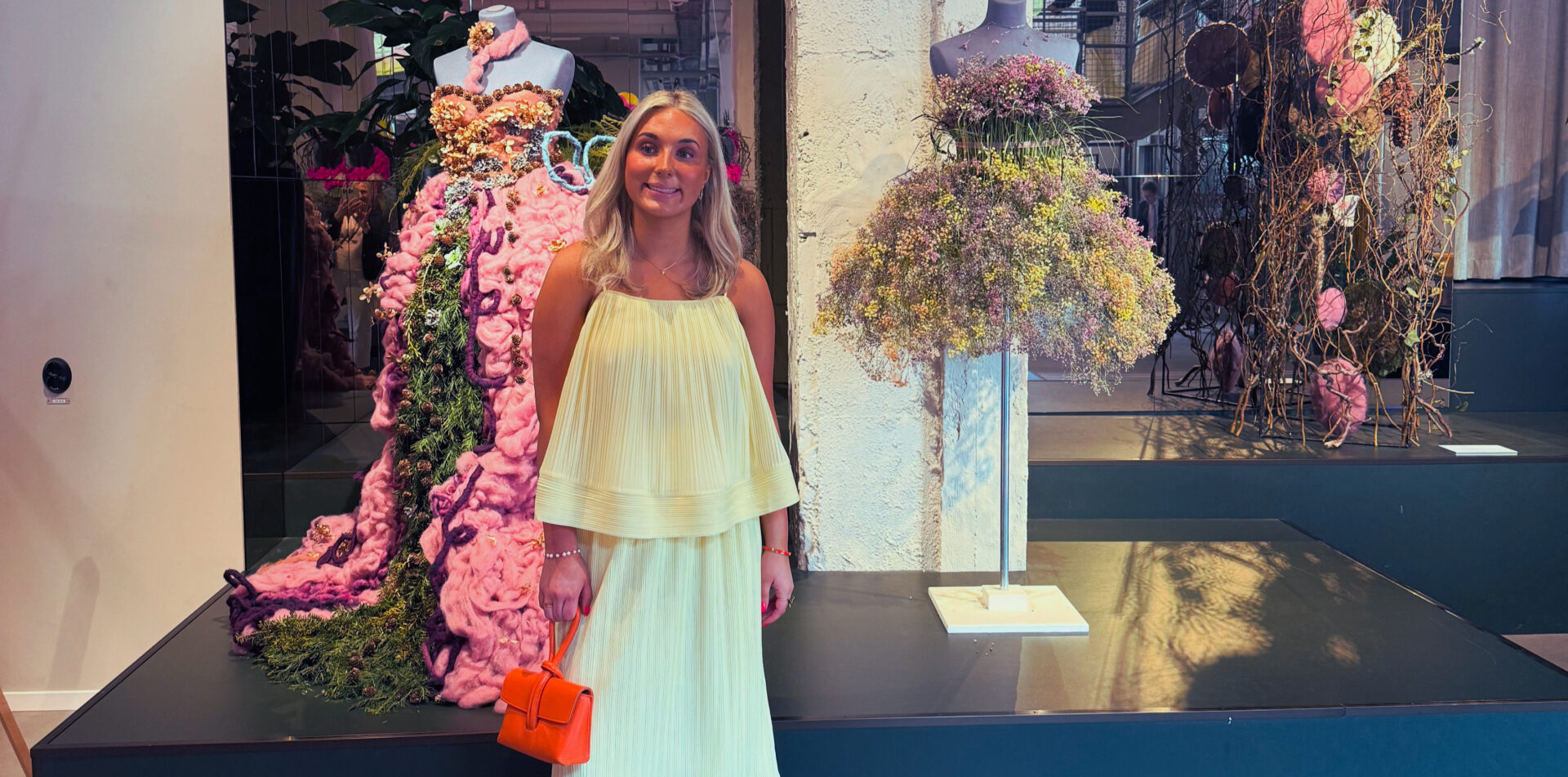
Get to know Nathalie Dufva, embroidery salesperson at ACG Nyström. Here, she shares her passion for textiles and design and her path into the textile machinery industry.
Nathalie studied Textile Product Development and Entrepreneurship at the Swedish School of Textiles in Borås. In February 2026 she joined the well‑established ACG Nyström, focusing on embroidery customers.
– I studied Textile Product Development and Entrepreneurship at The Swedish School of Textiles. It was a three-year bachelor program combining practical skills such as weaving, sewing, and garments with theory about branding, concepts and business development. I also did projects linked to real brands.
Although textiles and design have always been a passion, Nathalie’s interest in the machinery side grew from her curiosity about entrepreneurship.
– My interest in textiles goes back to childhood, I have always loved clothes, design and shopping. The textile machinery industry combines the creativity and the business side, which I like. I didn’t know much about embroidery or the machines behind it at first, I thought most production happened in China or Japan. Through embroidery I’ve discovered a whole new dimension, it gives a unique, beautiful finish to any textile product. Textiles are everywhere in daily life, and with embroidery you can influence products we use every day, from curtains and clothes to horse blankets and car seats – textiles can be found everywhere!
Today, Nathalie is an embroidery salesperson at ACG Nyström where she started in February 2026, so she is still very new both to the company and textile machinery industry.
– I started February 1 and as I’m new to the embroidery industry I’m shadowing an experienced salesperson and joining customer visits. I’m starting with accessories and will develop into machines. It feels like being back at school, I get a chance to dive deep into embroidery and lear a lot from experienced colleagues.
A typical day involves planning routes, visiting customers and following up on prior visits.
– Some days I’m visiting customers all day, other days I’m in the office. Since I started handing out business cards I get emails and calls, which is fun. I plan routes, call to offer customer visits which I get very positive responses to and then I send samples and do follow up work the next day.
ACG Nyström offer their customers efficient and high-quality embroidery solutions, focusing on speed and precision with a beautiful end result.
– Our machines are easy to use. You don’t need prior experience to achieve great embroidery. We place great emphasis on customer service and that we’re just a phone call away. We continuously visit our customers and focus on building a strong relationship based on their needs for support.
So why should someone consider a career in textile machinery?
– For me it was a whole new world! I assumed production only happened far away, but much of it can be done close to us. Embroidery can give the finishing touch to a garment and make it truly unique and it is fun to see how a garment changes and develops, something you wouldn’t get if production was remote. It’s a cool part of manufacturing, Nathalie says.
Looking ahead to the future of the textile machinery industry, Nathalie sees even more automated machines:
– Suppliers are developing machines that require less human touch and I believe there will be even more AI and robots in the future. Remote control and automation will grow, and systems will become smarter to streamline production. Customers want speed, simplicity and convenience, and development will head that way. I also see how the development takes the environment into consideration, all my courses at The Swedish School of Textiles touched on sustainability. The polyester thread most embroidery is made with is recycled, and more sustainable fibers such as cellulose and viscose are used in embroidery accessories.